> For the complete documentation index, see [llms.txt](https://docs.cisoko.net/llms.txt). Markdown versions of documentation pages are available by appending `.md` to page URLs; this page is available as [Markdown](https://docs.cisoko.net/store-robberies-evolved/configuration-settings/stores-config/individual-store-settings/polyzone-settings.md).
# Polyzone Settings
Discover all the settings incorporated dynamically into every store.
{% tabs %}
{% tab title="Polyzone Settings" %}
Base Settings for the Grove Street Gasoline Store
{% endtab %}
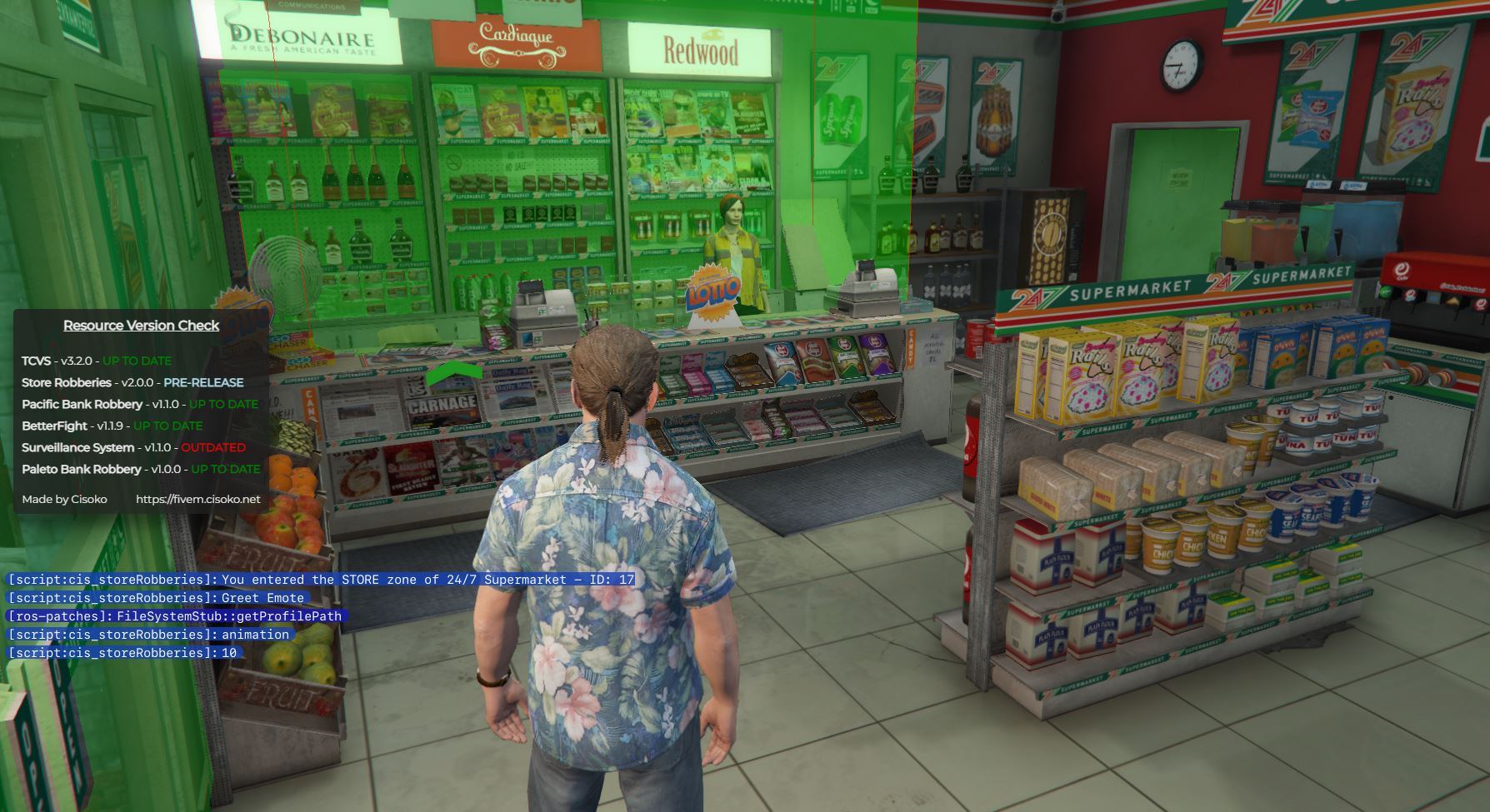
{% tab title="Visual Representation" %}
{% endtab %}
{% endtabs %}
{% hint style="info" %}
*This configuration section allows you to define the dimensions and locations of different areas within your store. These areas are represented as rectangular boxes, which are defined using a set of four `vec2` coordinates.*
{% endhint %}
{% hint style="info" %}
In the `polyzoneBoxData` section, we define three key areas using rectangular boxes: the main store area, the cashier area, and the storage room. The main store box encompasses the entire store, while the cashier and storage areas are smaller boxes located within the store. This allows for different interactions and events to be triggered based on the player's location within these specific zones.
{% endhint %}
{% hint style="danger" %}
To use this section effectively, follow these steps:
1. Identify the key areas in your store that you want to define, such as the main store area, storage room, and cashier area.
2. For each area, provide a unique name within the `polyzoneBoxData` section, like `store`, `storage`, and `cashier` in the example above.
3. Under each area, you'll find a `locations` section. This is where you specify the four corners of the rectangular box that represents the area. Each corner is defined using a `vec2` coordinate, which consists of an X and Y value.
* To add more than four locations, simply include additional `vec2` coordinates within the `locations` section, like this:
4. Adjust the `minZ` and `maxZ` values to set the minimum and maximum heights for each area. This defines the vertical range of the box.
5. If you want to see a visual representation of the boxes in-game for debugging purposes, set `debugGrid` to `true`. This will display a grid outlining the defined areas.
Remember to provide accurate and precise coordinates to ensure that the boxes align correctly with your store's layout. You can use in-game tools or coordinate capturing scripts to obtain the necessary `vec2` values for each corner of the areas you want to define.
By configuring the `polyzoneBoxData` section correctly, you can establish specific zones within your store, enabling features like triggering events, defining interaction areas, or setting up custom gameplay mechanics based on the player's location within these defined boxes.
{% endhint %}